College Accommodations for Autistic Students: What Actually Works
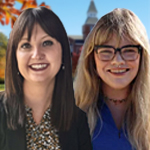
In this episode, Emilie Brotherton and Darby Schwien take us inside the ASCEND program at Missouri State University, a unique initiative supporting students with autism and other mental health challenges. They share how the program fosters connection through mentorship, social events, and a thoughtfully designed space for neurodivergent students. The conversation highlights the power of community, the impact of inclusive support systems, and offers helpful insight for prospective students exploring programs like ASCEND.
College Accommodations for Autistic Students: What Actually Works
All Autism Talk
-
Learn more about the ASCEND Program
-
Richie Ploesch
Emily and Darby, thanks so much for joining. Welcome to our show.
Emilie Brotherton
Thank you for having us. It's a great opportunity for us to talk about some cool stuff happening in Missouri.
Richie
I want to dive in so Emily, tell it. Can you tell us about specifically in Missouri? What ascend the program is, what it stands for and what the mission is?
Emilie
So ASCEND is a program at Missouri State University, specifically in West Plains. It is on our college campus. And ASCEND actually stands for Autism Support Can Empower New Directions. And so it's designed to support students with autism, but not just autism, but individuals with other types of neurodivergences, ADHD, depression, anxiety. And so we're just there to kind of give that lift to students that might have certain obstacles or barriers that keep them from, you know, communicating on certain things. We support academically, of course, but also socially and professionally. We try to give as many resources to our students to make sure they thrive in a college setting.
Richie
That's so great. I'm thinking back to my time on a college campus and I won't say when, because then you'll both know that I'm older than you. But I'm just thinking that there were some like traditional disability services that were available, but I don't know the scope of what was there. So can you maybe share a little bit of the difference between what has historically been the disability services on the university campus to what your program does?
Emilie
Yes, and I will disclose my age. I graduated from Missouri State University with my associate's degree in 2009. so, well, I will say just even within almost a 20 year period, just to see how it's gone from autism awareness
Richie
doesn't help me at all, Emily. Keep going. Sorry I interrupted you.
Emilie
in our society to autism acceptance. So I really think our program implements that and shows that because when I graduated, we didn't have half of the resources, even when it comes to tutoring or social events, things like that. It was kind of like, this is your two year degree. What are you going to do? Because we are a two year university. But with this program, It's not like any other program in the United States. There are other programs that are like, let's get you enrolled in college and kind of feel what it's like to be in the classroom, but have autism. So you can kind of, you know, go to college without getting credits. But our program strives to get that two year degree. It strives to get that certification. And we offer an array of different types of certifications and degrees. The goal is to just give that support. With that, we have like weekly meetings. I'll meet with the student and we kind of just it's a case by case basis of what the student needs. They may come in and say, hey, I'm really struggling in this class that I don't really know what to do or the professor really made me angry and I don't know what to do from here. And so we just kind of work through it together and they're able to kind of talk it out with me and we may format an email saying, hey, I really am struggling with this. How do we move forward? Or in some cases, I've had meetings with professors with the student there and we just kind of talk it out together. I feel like I'm kind of a coach per se or a mediator and each student has different needs, like I said, but like it may be, Hey, it sounds like you're dealing with some heavy stuff. Let's see what resources we have in the counseling department that might help you. cause a lot of our students aren't local. Darby luckily is, so she was able to commute and have family close by, but we have students that are out of state and their family is 12 hours away.
Richie
Yeah.
Emilie
They have to fly home for Christmas. So it's brand new for them to be away from their support system. And so I take.
Richie
That's so interesting. I'm sorry, Emily. cut you off.
Emilie
No, I just, take a lot of pride in that, that I get to be that person for them and that they can come to me and I want them to. I really do have a great job where, I don't know, I can be like, some of them say I'm like a mom away from like home. So it's, you know, it really works out.
Richie
Yeah. Yeah. I'm hearing coach. I'm hearing mentor. I'm hearing, you know, just offering individual support. Darby, during that time you were kind of shaking your head. Yes. To a lot of those things. can you tell us a little bit about your experience going through the program and what that felt like?
Darby
the program was honestly a massive help to me. I did attempt the whole college thing before, but it did not go well. I got overwhelmed and I ended up dropping out. Now this has been like nine, 10 years ago and that's how long it took me to go back and coming into the program, you know, they offer things like, I was able to take my tests in a separate room from the other students and that changed my grades in immensely because I have so much test anxiety. Like I could know all the answers, but I'll get so nervous. I will just rush through it and it doesn't go nearly as well as it could. So that was a big difference. And meeting Emily and having her kind of as my mentor was a big difference too, because like she said, there were weeks I needed more support and there were weeks I was like, girl, let's just talk. Like, can we, can we just.
Richie
That's huge. Hahaha
Emilie
Mm-hmm.
Darby
hang out a little bit and even that made a big difference and having the social events as well. I am not the most outgoing person on my own. Like I am the type to run to class and run home, but those really encouraged me to speak to like the other students and even my classmates that weren't in the program. I became close with several of them. So it really has made a big difference in my experience as a whole.
Richie
So you tried college. It was overwhelming and not supportive. And you came back nine years later and found this program and have had amazing success going through it and have had a much better experience. And it sounds and you're smiling as you're talking about it. So it sounds like it was a, was overall really positive.
Darby
It really was. did. It made a big difference and I was so happy to have the support of the program. I did get my associate's degree from there just very recently. Thank you. That was a really big deal and I am excited to move forward but I'm really hoping that we can advocate for the program so maybe more things like this can be implemented into other colleges because -
Richie
Congratulations.
Darby
I really do think it makes a difference.
Richie
We're sure. And it sounds like there's an immense need. I want to talk about the social events, but we're going to come back to that because Darby, I'm curious from your perspective, as you were starting the program, what was the outline? Like were you meeting with Emily once a week and then twice during test weeks or tell us a little bit about that plan of where you started.
Darby
So when I first started, we were under different management. So I had meetings with somebody other than Emily, but it was weekly meetings. We had a homework tracker. That was helpful because I had a lot of reading I was supposed to do. So we would break down like, these days you'll read these chapters for this class and these days you'll read these other chapters for a different class. And that, I really stuck to that and that made a big difference. And we have our regular classes Monday through Thursday, and then Fridays we have our ASCEND classes and they're broken up into first year and second year students. So the first years are a lot of introductory classes, kind of just teaching you the basics and how college works. Yeah, just basics like that. And second years are a bit more, like the more advanced stuff moving on, searching for careers and different resources like that.
Richie
Mm-hmm.
Darby
But it was as structured as you need it to be, if that makes sense. It's very personalized. And I think that's my favorite thing about it is you don't feel like you're just a number. You feel like you're an actual person with real needs that people are listening to.
Richie
That's a huge compliment for you, Emily, right? Like for people not to feel like a number, it's so easy to get caught up in the, gotta do this meeting, I gotta get to this, I gotta make sure these people have all this stuff that you forget the human aspect of it.
Emilie
Yeah. Well, I will say I've worked with autistic people on the spectrum since I was 15. Part of, and I will say a huge influence. My mom was a teacher in high school. So she knew a bunch of different people. And so my mom's friends, it was always just like, I'll just go job shadow them. People that I already felt comfortable with. But luckily for me, I'll name drop Miss Murray and Miss Kramer. I would always choose to work in their self-contained classroom. And the way that I saw them interact with these individuals, with empathy, with patience, it really was inspiring for me as a young person to kind of be like, these people have value. whenever we were, you know, I graduated high school in 2006, it was a different time then. And it's unintentionally, I was setting my path for my career. So I feel like I'm really honored to be able to work with neurodivergent individuals and get to know them. They teach me things every day, just how to see things from a different perspective. And I think...We as a society can learn from people that are neurodivergent just as much as they can learn from us. So I take it as an honor to be able to be the representation of this program and talk about it just because working with Darby, was great. She taught me things and just kind of. well, that's an interesting perspective or she, you know, would talk about her hurdles and obstacles, even though she's much younger than me. was like inspiring to see her overcome some of these challenges that she faces every day. And so I really am inspired by my students. and so I feel like this is the perfect place for me. And, like I said, it's, I worked at a boys and girls club. So they would, I was an administrator, so we didn't turn anybody away, but if they had a diagnosis, they were like, we'll just send them to Miss Emily. And so we would do things in my office. I was like the finance person, but I loved working with, you know, the autistic kids. So it's just, I think this is just kind of, it kind of fell into place for me. Before this, I worked as a teacher in an alternative school, a high school level.
Richie
Yeah.
Emilie
And so of course I had students that were neurodivergent in my class. And so we had so many interesting conversations and perspectives. just think, you know, it opens up a whole new, like I said, I keep saying perspective, but like, you know, for me it's, I never thought of it that way. That's a good point. Or, Hey, you know, they'll come in with their issues and it's like, Hmm, I'm kind of stumped too. Let's work on this together and figure out how to resolve it.
Richie
Sure. Yeah, that's so interesting. I think what you just outlined for us is a little bit of what draws you to the program, Emily, right? And I'm curious what draws students to the program. It's the support, it's the mentorship, but what are other components that help them, I guess, find Ascend and then find success in the Ascend?
Darby
yeah, honestly the first thing, there are several things, but the first thing that came to mind was the building that we have. That is a huge thing. They have built us a specialty building. It's got tons of sensory things throughout it. We've got walls with different patterns on them. We have breakout rooms which you can go in and my favorite thing is you can control the lights. Like that sounds so minor, but sometimes I don't want those super bright fluorescent lights. I want something a little more chill. And we've got different rooms like that. There's just several spaces you can go to kind of escape when we just need to focus a little better or just not be around like a large amount of people. So when I first saw like the building got completed while I was within my college journey and I started using it quite a bit from that point. So that was really cool. But other than that, when I first was applying, they told me about it. It was very new at the time and they just described it as a support program. And I didn't get a whole lot of information about it, but I went over and talked to the people running it and I remember they were so nice and like genuinely interested in my own college journey. And I know I'm repeating myself from earlier, but it's very personable. that, really stuck out to me was that they seemed to really care about my own journey and what I was doing, what I needed to accomplish that. And I just thought that was so unique. Like it's, it is difficult to find somewhere that is really focused on just the entirety of your own journey.
Richie
Yeah. Kudos for you. It sounds like that was a very brave moment for you to say one, I need this help and for them to say, yeah, go check this out. And you're like, I don't really know a lot about it. And I just, I'm thinking of the walk over for you. And in my mind of like, what am going to say when I get there? What am I going to ask? What's going to happen? Are they going to help or not? I just, thinking of that moment for you and good job for you, you know, kudos for you for actually doing it.
Darby
Thank you.
Richie
So- You've got this big sensory friendly building. Right, filled with students who can access their curriculum around them and get supports, right? What what you know physical space is so important, right? For all of our for anyone who's neurodivergent for all of us really. You know Emily from your perspective, what are some things that the physical space really brings to the student and their experience?
Emilie
Well, Darby talked a lot about the building, but it is the only building in the nation that is on a school campus that revolves around neurodivergency. So we've got a lot of natural lighting. Like she said, the walls are textured to where the sound is even muted a little bit. You walk in and it's this big open room, but it's really muted because of how the wall patterns are there's different textures, as she said. but even like in our classroom, we have different types of seating. have different types of, like you can ride on the desk. have different desk styles, whatever makes them feel comfortable. And honestly, like, I even talk about this with my own children. Like when I dress them for school, if you're not physically comfortable, how are you going to retain and learn in an environment that's not conducive for that.
Richie
Yeah, so true. Yeah. If you're fidgeting with the tag on your back, you're, you're worrying about the tag, not about whatever's being presented in front of you, right? It's hard to focus on math or history or, you know, world literature or whatever it may be. If you're, if the tag is bothering you. And I'm just using that as an example. That's one I'm familiar. Yeah. Yeah. I want to talk, I want to go back actually, Darby, you mentioned the social events.
Emilie
Mm-hmm. Exactly. Yeah.
Richie
were very helpful for you in building really a social network on campus, right? Can you tell us about the events and then tell us about how they helped build that network for you?
Darby
so we usually do like one every month and, it's, different environments too. Like the very first one I ever went to was a volleyball game, which I, I enjoy sports, but I enjoy watching them from my couch. I never really go to the actual event. So this was definitely a, a big step for me because, you know, the noise and the crowd and all of that is not necessarily my thing, but I went, I had doubts going into it, but I had a great time. We had great conversations. They offered noise canceling headphones if any of us needed them, which I thought was just amazing. But I really just, I really liked the people that I was around and we had a great time. And some of the others aren't as...Like we have a lot of game days just with the ASCEND students. People were bringing their gaming systems and I'm a huge gamer. So I, you know, I love that. I love that we were able to do that and bring different systems, even like board games, whatever. It was kind of just geared toward us, what we wanted to do. There was something for everybody. Yeah, there's, we do a little Christmas party and that was super fun too.
Richie
What do you want?
Emilie
I think I stole your gift. Yeah, I stole her Darth Vader gift. So yeah, I remember that.
Darby
so you did.
Richie
Was it just... I feel...I feel like we're opening up old wounds here. no.
Darby
I ended up with a Yoda, so it was okay.
Emilie
Yes.
Richie
Yeah, that's good. Darby, these events, was it just a send students or was it others with other members of the student body from other parts of the campus or mix?
Darby
it's, it's a mix usually like other students are invited. We do have our ally program, which is, that was really nice. I actually became pretty good friends with both of the allies I had in different semesters. they are, they are like a support program. They're not in the program themselves, but they're invited to the events. They're, know, they're invited to anything we do. And, my last ally, her name is Kirsten and we just we sat by each other at the Christmas party. cracked up the whole time. Like it was, it was so fun getting to know her and we would go out to eat outside of events too, just us. And so that, that was also one of my favorite parts. Like the, the ally I had first, I am actually still in contact with her and she has since she has finished school and she's not a student there anymore, but we're still in contact with each other. So that, that was hopefully a really long friendship that I was able to make from the program.
Richie
That's amazing. I feel like one of the things that happens is, you know, on a college campus, you get so into your. I want to say cohort. I don't have a great a better word for it, but you get like you're in your spot and then this other group is in their spot and then there's another group in their spot. And so to be able to transcend into different walks of life and meet different people with different interests and to maintain that friendship after school, I think that's, that's super important. That social network is huge for all of us, right? And it sounds like you found that and that you've maintained that.
Emilie
Mm-hmm.
Darby
definitely. We still go to the movies together. That's our main thing is going to the movies. So we absolutely love that. yeah, that was one of the biggest things I did for me was helping the social aspect. And we were even able to set social goals. Like I was having trouble sharing in one class that was really big on us. It was a very small class, but very big on us sharing.
Emilie
Mm-hmm.
Darby
during our readings. And that would be one of my goals sometimes was if I can just get a single thought out or I can make some notes and talk during this class, that would be my goal for the week. And I ended up meeting them a lot more than I was missing them. So that was, that was huge for me.
Richie
Good for you. Emily, how much are you involved in building the relationships between the students and the Ally program?
Emilie
I'm very big involved with that. I conduct the training on that. So we go over with students that are interested. They fill out a form that's on our website that they are interested in the Ally program. And it's very laid back. We don't want to intimidate people to think that it's a part-time job on top of college, on top of work. And for them to not look at it like that, for them to look at it as something fun to do. And to get to know a different type of person, you know, like I said, I was introduced at a young age to working with nearly nonverbal autistic students. And, you know, whether people are intimidated or they have these stigmas that have been introduced to them, it's a great way to put those barriers down and be like, wow, they this is definitely a spectrum. Like I, you know, each one of my students is vastly different. I think, you know, I'm kind of a huge nerd anyway, but I think like, yeah, but like being interested in Pokemon and Star Wars and things like that, just kind of taking a minute to listen, like, hey, they want to talk about this, you're going to find something you have in common with them.
Richie
Welcome to the club.
Emilie
And one thing I try to reiterate to not just my students in the ASCEND program, but really any young adult is, everybody's feeling the same way on campus when they're nervous, when they are anxious, they're experiencing some of the same social things. So that was one thing like with Darby in particular that I remember being like, you know, you do understand that what you're relaying isn't necessarily autism. It's just being a young adult. It's just being a new person on campus. I'm still in grad school, so even whenever I go in and I have to introduce myself in front of everyone, even via Zoom, it's just like, boy, are you serious? Again, hello, and you mess your name up or whatever, something so simple. So I think that's one thing I like about the Ally program is I really try to instill like, hey, we're all in this together. Let's have a good time. It's like she said, we went to a volleyball game. That was a lot of fun. And we had some students that absolutely, they're like, this isn't it. This is not for me. But then we have game day and then you really get to see them blossom and like spread and just be themselves. And then other people are like, this is a lot of fun. So it's kind of building that bridge between that and saying, hey, there really isn't a bridge. Like we're all in this together. We're all Grizzlies. We're all on campus taking the same classes. And I think it's important to note, like for our program, just because you had an IEP, like an individual education plan in high school, our ASIN students are doing the same work. There are no modifications to assignments. There's accommodations, as Darby mentioned. We can have a different environment for test taking. But as far as modifying the assignments, the expectation is there that they will complete the same assignment as everybody else.
Richie
It's so I'm hearing this and I'm thinking like, man, this checks all the boxes, right? You've got social emotional support. You've got academic support. There's support in the form of the physical. The actual physical space is a supportive environment, and I just hope that more people reach out and take advantage of the opportunity that's there, both from the program and the ally program. I think both are really benefiting individuals that you know I'm thinking about Darby having this great relationship and that would not have happened for either one of you had you not been in this program and had they not been in the ally program. Emily where can people find more about the ascend program where can people get more information.
Emilie
So we do have a Facebook page and we promote a lot of the things that we do on there. We're also on the Missouri State University West Plains website. We have our own page there, but really our Facebook page, that's gonna show some of the activities that Darby has talked about. It's gonna like, we're gonna post when to enroll in things. We're going to be a sponsor for a autism walk in April. So we're really promoting that. It's homecoming week this week. I actually had to change clothes because it's spirit week and it's neon. And I was like, I don't know how that's going to look. so just our Facebook is a great place to, to find information, just current happenings. But if you want more information on how to like enroll in the program, you enroll as a student at the university, you get accepted. And then from there, you'll apply for us on the Missouri State website. And I'll just elaborate a little bit more on that. That process looks like you'll apply if you have had an IEP, it's beneficial to submit that. And then from there, we have a interview with you. If the person has a parent that wants to be involved, the parent will be interviewed as well because again, it's a spectrum. So everybody's so different. Darby was very independent. She didn't have, like, I didn't mean to talk to a parent, but there is that aspect for some of our students that, parents are going to want to check in because they just put their son who can't communicate as effectively as others on an airplane to come to West Plains, Missouri. Our population is 12,000. It's a very small rural town compared to where some of these students live. But I think that's a benefit for this too. We are a small town. We're very close knit. I was born and raised here. I think that merits our program to very focused on personal, what am I trying to say? Like she said, just, yes, exactly.
Richie
More individualized support. Yeah. Darby, if you could give advice to a person who's kind of not sure if they should look more into this or not. You know, I'm thinking about the person who was you nine years ago. You know what? What advice would you give to that person? Would you say to them?
Darby
That is a tough one thinking of advice because really when I think of myself going into it, had to just do it. I had to just jump in and think. What I kept thinking was what's the worst that could happen? Like I'm, you know, I'm not going to lose anything if I apply and get rejected. Nothing in my life currently is going to change. I will just, you know, if that makes sense at all. That was my biggest thing was just getting over that hurdle of fear and anxiety of like, what could go wrong? What if they say this? What if they don't like me? What if they reject me and all that? And just realizing that even if they were to reject me, what's the worst thing that's going to happen? It's really not that bad. So just gathering that courage to just take that step and seeing what could happen and going into everything with a more open mind. And because I have a tendency to focus on the negatives. know a lot of us do. So trying to adjust that. And if you can't focus on the positives fully, then even just having that mindset, like I said, of there's like nothing bad is going to come of this. So I might as well just try because maybe something good will come out of it. So that's, I don't know if that's what you were looking for, but that's the-
Richie
Yeah, no, that's great.
Darby
that's the can think of. That was my mindset at the time going into it.
Emilie
Mm-hmm.
Richie
Well, I think that's super helpful. mean, I think it's so easy to tuck ourselves out of the opportunity. And so what you're saying is, you know, throw yourself out there. It may work out to be wildly successful, right. And but you won't know if you don't try and, and, know, congratulations to you on trying and succeeding and finding that path to success and getting your AA and Emily congrats on a successful program. sounds like things are going really well. We're happy to-Happy to hear about it and learn about it. Thank you for sharing. Thank you both for sharing in your time today.
Emilie
Yeah, thank you for having us. I will say, I think as an adult, and any advice that I would give to students, people in college, people outside of college is when you do receive a diagnosis, you should embrace it. Don't see it as like a problem. See it as instead of like a roadblock, see it as a roadmap to embracing that that was something with Darby is I was very transparent with my neurodiversity. And, you know, I'm 38 now and to let young people know like you're gonna have this and just to embrace it and see what you can do with it because I never would have seen myself here being in a special ed class in elementary school. You know, I thought, well, I'll never go to college. I'll never do that.
Richie
Yeah.
Emilie
So I think that it just, you know, for Darby, I'm so proud of her and just to see how far she's come and where she's going to go because I know she's going to go for
Richie
This is just the beginning, sounds like for both of you.
Emilie
Mm-hmm. Yep. Thank you. Thank you.
Richie
Yeah, thank you both. Congratulations.
Darby
Thank you.